“Repent, for the kingdom of heaven is at hand.” (Matthew 3:2)
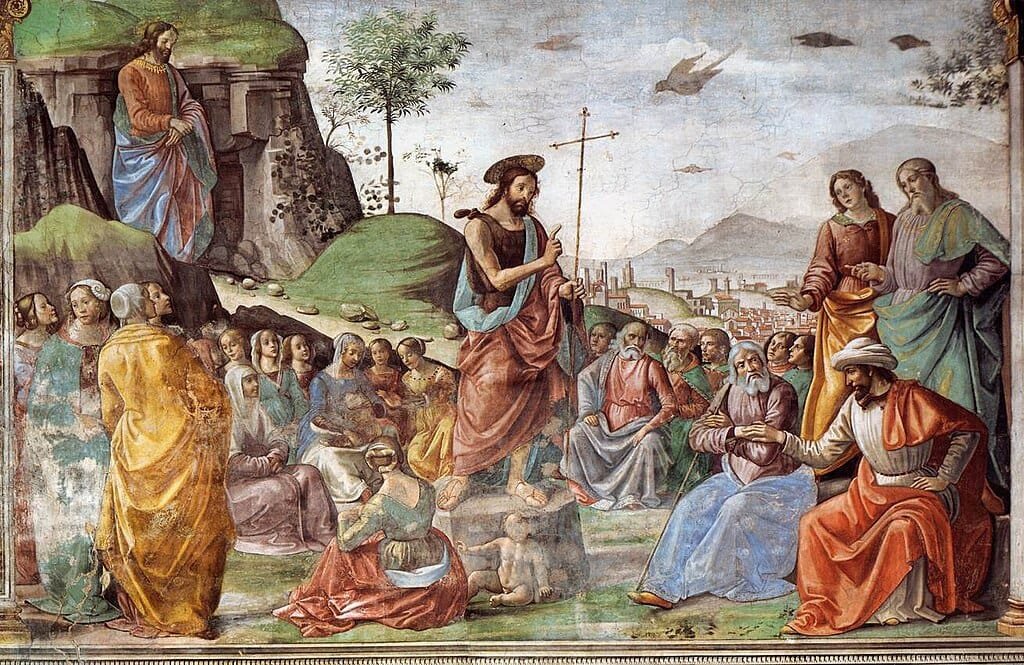
On the Second Sunday of Advent, the Church sets before us the figure of John the Baptist:
the forerunner, the voice in the wilderness, the one who points directly to Jesus and says,
“Behold, the Lamb of God.” In this homily, Fr. Roger Morgan helps us see John not
only as a powerful preacher of repentance, but as the fulfillment of ancient prophecies —
the “new Elijah” who stands at the hinge of salvation history just as the Messiah arrives.
“Repent”: Metanoia and Teshuva
When John cries out, “Repent!” the word he uses is not a shallow “feel bad and move on.”
Fr. Morgan reminds us that in the Greek of the New Testament, the word is
metanoia, which literally means a change of mind — not just about one issue,
but about the whole of my life. It is a total rethinking of my identity, my purpose,
my priorities, and my relationship with God.
In Hebrew, the word for repentance is teshuva, which literally means “to return.”
It is the image of someone who has gone down the wrong road, realizes it, turns around,
and goes back. It is also the image of someone returning home after a long absence.
To repent is to come home to the Father after wandering far away.
So when John the Baptist calls Israel to repentance, he is calling them — and us —
to a deep change of heart and a true return to the Lord:
leaving behind sin, false paths, and spiritual exile.
The Last and Greatest of the Prophets
Fr. Morgan situates John firmly in continuity with the prophets of the Old Testament.
Time and again, God sent prophets to call Israel back after they had strayed —
when they trusted in wicked kings, worldly power, or idols made of gold.
John stands in that same line, but with a unique urgency.
Unlike those who came before him, John is able to point, literally and specifically,
to the long-awaited Messiah. He is the prophet who can finally say:
“Behold, the Lamb of God.” In him, the age of promise meets the age of fulfillment.
John the Baptist and the Return of Elijah
Matthew tells us that John fulfills the prophecy of Isaiah—the “voice of one crying out in the desert, ‘Prepare the way of the Lord.’” Yet Fr. Morgan highlights that this is not the only prophecy John completes. By describing John’s clothing of camel’s hair and a leather belt, Matthew intentionally echoes 2 Kings 1:8, where Elijah is identified by the same attire. This detail signals to the reader that John appears in the spirit and mission of Elijah, just as Israel expected before the coming of the Messiah.
The prophet Malachi had foretold that “Elijah would return before the great and dreadful day of the Lord” (Malachi 4:5–6). Matthew’s description of John is therefore more than a stylistic note—it is a theological declaration: in John the Baptist, the long-awaited return of Elijah is fulfilled. The Church Fathers emphasize that this is not a literal reincarnation, but rather that John comes “in the spirit and power of Elijah” (Luke 1:17), sharing his boldness, austerity, and prophetic fire.
Fr. Roger Morgan, pastor of St. Andrew Catholic Church, has been steadily renewing the parish’s liturgical life with a clear vision for beauty, reverence, and sacred tradition. Under his leadership, the liturgy has taken on a deeper sense of solemnity, with stronger attention to chant, sacred music, and the fullness of the Church’s rubrics and traditions. His pastoral work reflects a conviction that beauty evangelizes, and that a parish’s worship should lift hearts toward the holiness and majesty of God.
Donate to St. Andrew's Renovation Project
About Fr. Roger Morgan
Fr. Roger Morgan serves as pastor of St. Andrew Catholic Church in Myrtle Beach, SC. Under his leadership the parish has begun a liturgical renewal, emphasizing reverent worship, sacred music, and preaching deeply rooted in Scripture and the Church’s rich tradition.
📍 Parish website:
standrewcatholicchurch.org
🎙️ Homily archive on SoundCloud:
soundcloud.com/standrewsmyrtlebeach
👤 Pastor bio page:
Fr. Morgan — Parish Staff Profile
🏛️ Diocesan directory listing:
Charleston Diocese • Rev. Roger James Morgan
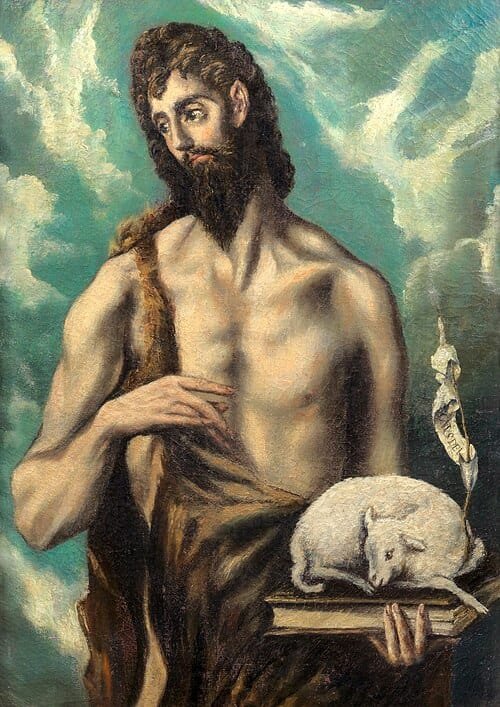

The Church Fathers consistently taught that John the Baptist fulfills the mission of Elijah not by returning as the same person, but by receiving the same prophetic spirit and authority. St. Jerome points to John’s austere clothing as a deliberate echo of Elijah’s identity, while St. John Chrysostom explains that John inherits Elijah’s boldness in calling Israel to repentance. St. Augustine adds that John is the “voice” preparing the way for Christ, just as Elijah prepared Israel for God’s saving work. Together, the Fathers show how John stands at the crossroads of prophecy and fulfillment, ushering in the age of the Messiah.